


Floor-Mounted vs Suspended Toilet Cubicles: Comparing Installation and Maintenance

Choosing a washroom layout is a big job. You think about space. You think about cost. You think about how easy it will be to clean. One choice sits at the heart of it all. Do you fix the walls and doors to the floor? Or do you hang them from above? Both styles work well. Each has its own strengths. Each has its own limits. This guide looks at both. We focus on how they go in and how they are looked after. By the end, you will know which one suits your building, your budget and your people. Let us start with the basics.
What Are Floor-Mounted Cubicles?
Floor-mounted units are the classic choice. The panels stand on short legs. These legs are fixed to the floor with bolts or brackets. The panels then join to the walls with simple clips. The result is a firm and steady cubicle. It will not wobble. It will not shift when someone leans on it.
Many toilet cubicles in schools, offices and shops use this style. It has been tested for decades. Builders know it well. Cleaners know it well. That is a big plus. There are few surprises. If you need a safe and proven option, this is it.
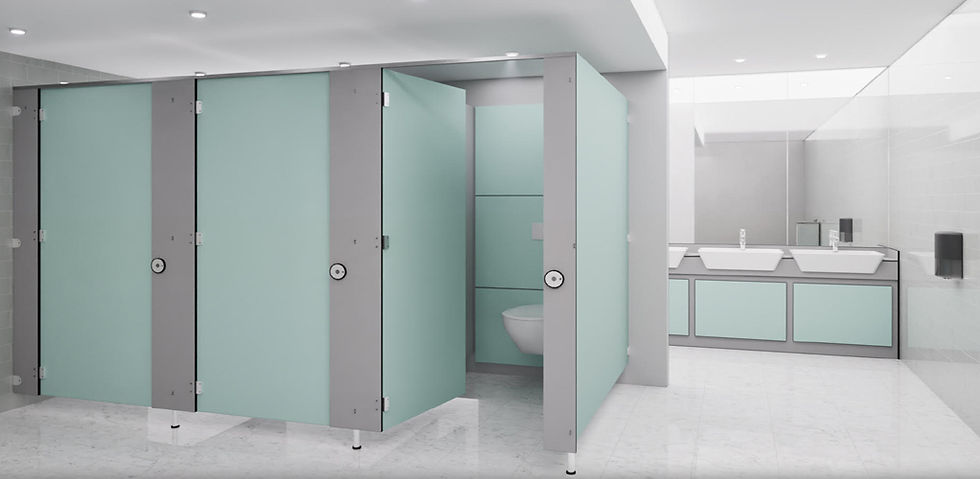
The legs are often made from stainless steel or tough plastic. They lift the panels a few centimetres off the floor. This small gap helps with cleaning. Water and dirt can be swept out with ease.
What Are Suspended Cubicles?
Suspended units work in a different way. The panels do not touch the floor at all. They hang from a frame fixed high up. This frame might be a ceiling grid or a strong head rail. The panels then float above the ground. You can see the floor running clear beneath them.
This style looks clean and modern. It makes a room feel bigger. It also gives a high-end look. Hotels, galleries and smart offices often choose it. The open floor also helps the light travel across the room.
Suspended designs ask more of the building. The ceiling must be strong. It must take the weight of every panel and door. If the ceiling is weak, this style will not work. This one point can decide the whole matter.
Installing Floor-Mounted Cubicles
Floor-mounted units are simple to fit. The fitters mark the floor first. They drill holes. They fix the legs in place. Then they slot the panels on top. Last, they hang the doors and add the locks.
Most jobs take a short time. A small block of cubicles can go in within a day. The fitters need only basic tools. They do not need to touch the ceiling. That keeps the mess low and the job quick.
There is one catch. The floor must be level and solid. If it slopes, the panels may lean. Fitters can adjust the legs to fix small gaps. Large faults need more work. Check the floor before you order. A quick survey saves time and money later.
Many buyers choose to work with trusted toilet cubicle manufacturers for this reason. A good maker checks the site before the build. They measure twice. They plan around pipes, drains and walls. That care helps the fit go smoothly.
Installing Suspended Cubicles
Suspended units take more planning. The fitters must first check the ceiling. They must know how much weight it can hold. Often a steel frame must be added above the old ceiling. This adds time and cost.
Once the frame is safe, the fitters hang the panels. They line them up with great care. Each panel must sit at the same height. Even a small error will show. The floor gap runs the full length of the room. Any slope will be easy to spot.
The job needs skilled people. It also needs good tools. Because of this, the work often costs more. It may also take longer. A large block could need several days.
There is one clear gain. The floor stays free. You do not drill into it. This helps in rooms with heated floors or fine tiles. It also helps where the floor is damaged or uneven. The ceiling does the work instead.
Daily Cleaning and Hygiene
Cleaning is where suspended units shine. The floor runs unbroken beneath the panels. A mop can glide from one end to the other. There are no legs to dodge. There are no tight corners where dirt can hide.
Cleaners save time. The work is faster. The result is more even. In busy places, this adds up. A shopping centre might clean its washrooms many times a day. Every saved minute counts.
Floor-mounted units are still easy to clean. The legs are slim. The gap beneath the panel is small but useful. Still, the legs hold dirt around their bases. Cleaners must wipe each one. Over a year, that takes more effort.
Good design can help either style. Smooth panels clean faster than rough ones. Sealed edges keep water out. Tough finishes resist stains and scratches. Ask about these details before you buy.
Long-Term Repairs and Wear
Think about how each style ages. Floor-mounted legs face water, soap and bleach every day. Over time, cheap legs can rust or crack. Good stainless steel or high-grade plastic lasts far longer. Fixing a leg is simple. A fitter can swap it in minutes.
Suspended systems have fewer parts near the floor. That means less rust and less damage. But the hidden frame is harder to reach. If a part fails, the fitter must get above the ceiling. That takes more effort. A repair can need access panels or ladders.
Doors and hinges wear in the same way on both. They are used all day. Pick strong hinges. Pick locks that are easy to replace. A small upgrade here pays off for years.
Impact is another point. Floor-mounted panels sit on solid legs. They can take a knock. Suspended panels can sway a little more. They are still safe. But in rough places, such as busy schools, the sturdier feel may be better.
Cost Over Time
Price matters to every buyer. Floor-mounted units usually cost less to buy. They also cost less to fit. The parts are simple. The labour is short. For tight budgets, this is a strong point.
Suspended units cost more at the start. You pay for the frame. You pay for skilled fitters. You may pay for ceiling work too. Yet the cleaning savings can balance some of this over the years. In very busy sites, the gap may shrink.

Look at the full picture. Add up fitting, cleaning and repairs. Then compare the two. The cheapest option on day one may not be the cheapest after ten years.
Which One Should You Choose?
Start with your building. Is the ceiling strong? Is the floor level? Answer these first. They often settle the question.
Next, think about your users. A school needs tough, simple units. A boutique hotel may want a softer, high-end look. A factory needs low cost and fast cleaning. Match the style to the need.
Then think about time. Do you have a tight deadline? Floor-mounted units usually go in faster. Do you have time to plan? Suspended units may be worth the wait.
Last, think about looks. The floating style feels light and airy. The grounded style feels solid and familiar. Neither is wrong. It comes down to taste and use.
Finding the Right Supplier
Good advice makes a big difference. The right partner will visit your site. They will check your floor and ceiling. They will explain each option in plain words. They will not push the dearest choice.
Washroom Cubicles Direct Ltd helps buyers across the country pick the right system. The team offers a wide range of styles and finishes. They support projects of every size, from a single room to a large site. Their advice is clear and honest.
If you search for toilet cubicles UK buyers trust, look for a firm with real experience. Ask for samples. Ask for case studies. Ask about lead times and aftercare. A strong supplier will answer with ease.
Conclusion
Both styles have a place. Floor-mounted units are simple, firm and cost less. They suit most sites and go in fast. Suspended units look sleek and clean with ease. They cost more and need a strong ceiling.
Think about your building, your budget and your users. Weigh the fitting time. Weigh the cleaning effort. Weigh the repairs. Then choose with care.
If you need help, speak to an expert. The right advice will save you money and stress. A well-chosen washroom serves people well for many years. Make the choice once. Make it right.

Comments